The Hidden Revenue Killer for Hospitality: Outdoor Wind Intrusion
For restaurants, cafes, rooftop bars, and boutique hotels, outdoor terraces and patios account for 40% to 65% of overall food and beverage revenue. Yet unpredictable wind gusts, airborne dust, and sudden temperature drops leave prime outdoor tables unoccupied for weeks or even months every year. Many hospitality managers attempt to counter this with outdoor patio heaters, but wind shears dissipate up to 80% of radiant heat instantly—spiking utility bills without making guests comfortable.
This is why leading hospitality venues across Europe and the UK invest in certified commercial patio windbreaks (commercial glass windbreak systems). By creating a calm, sheltered micro-climate, architectural glass barriers transform wind-swept outdoor areas into high-turnover dining destinations that operate 365 days a year.
Commercial ROI Analysis: How Fast Does a Glass Windbreak Pay for Itself?
When investing in architectural commercial glazing, calculating the Return on Investment (ROI) is vital for restaurant owners and property managers. Consider this standard industry scenario:
- Terrace Capacity: A medium-sized restaurant terrace with 10 tables (seating 40 guests).
- Wind-Lost Operating Days: Days lost or cut short due to chilly drafts and wind across spring, autumn, and breezy summer evenings: roughly 70 to 80 days annually.
- Average Spend per Cover: €35 – €65 per guest.
- Daily Gross Revenue Lost: Turning over those 10 tables twice per day represents €2,800 to €5,200 in gross revenue lost every single windy day.
- Annual Revenue Impact: Over €150,000 in unrealized terrace turnover each year.
Compared to this recurring revenue bleed, the one-time capital expense of installing modular, commercial-grade tempered glass wind barriers is recovered within 60 to 90 days of normal operation. Every season thereafter, the sheltered terrace operates as pure incremental profit.
Selecting the Ideal Windbreak Configuration for Your Venue
Different architectural footprints, municipal permits, and leasing structures require tailored technical solutions:
1. Self-Ballasted Planter Windbreaks (Mobile & Non-Invasive)
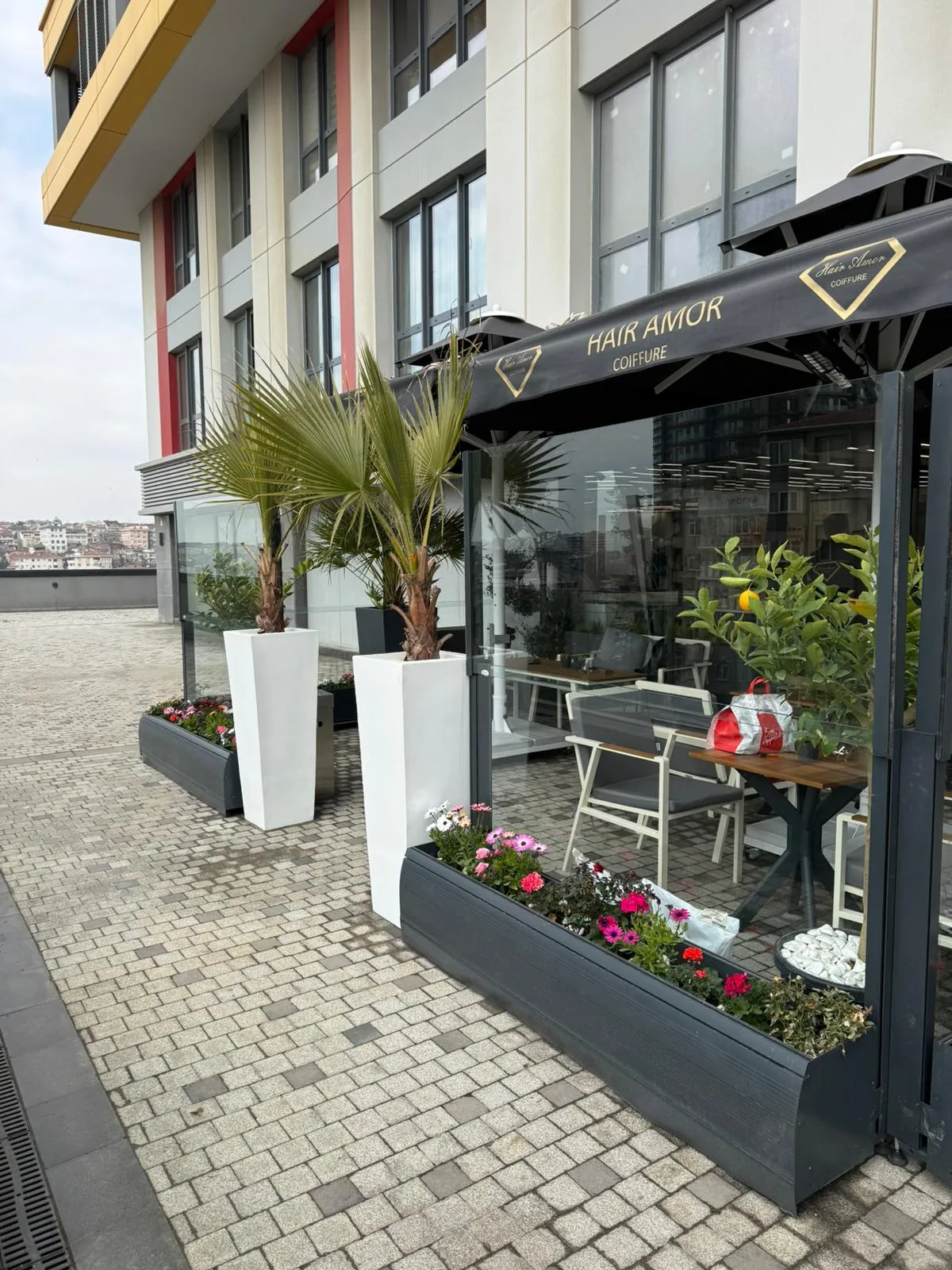
For leased retail properties, historic city centers, or pedestrian sidewalks where drilling into stone or concrete is prohibited by local councils, planter glass windbreaks are the premier solution. Integrated heavy-duty aluminium planters provide structural ballast using decorative greenery (boxwoods, bamboo, or flowering shrubs) to prevent tipping in heavy winds. Concealed casters allow waitstaff to easily reconfigure the layout for large parties or private events without municipal permits.
2. Floor-Fixed Architectural Glass Wind Barriers (Maximum Wind Load)
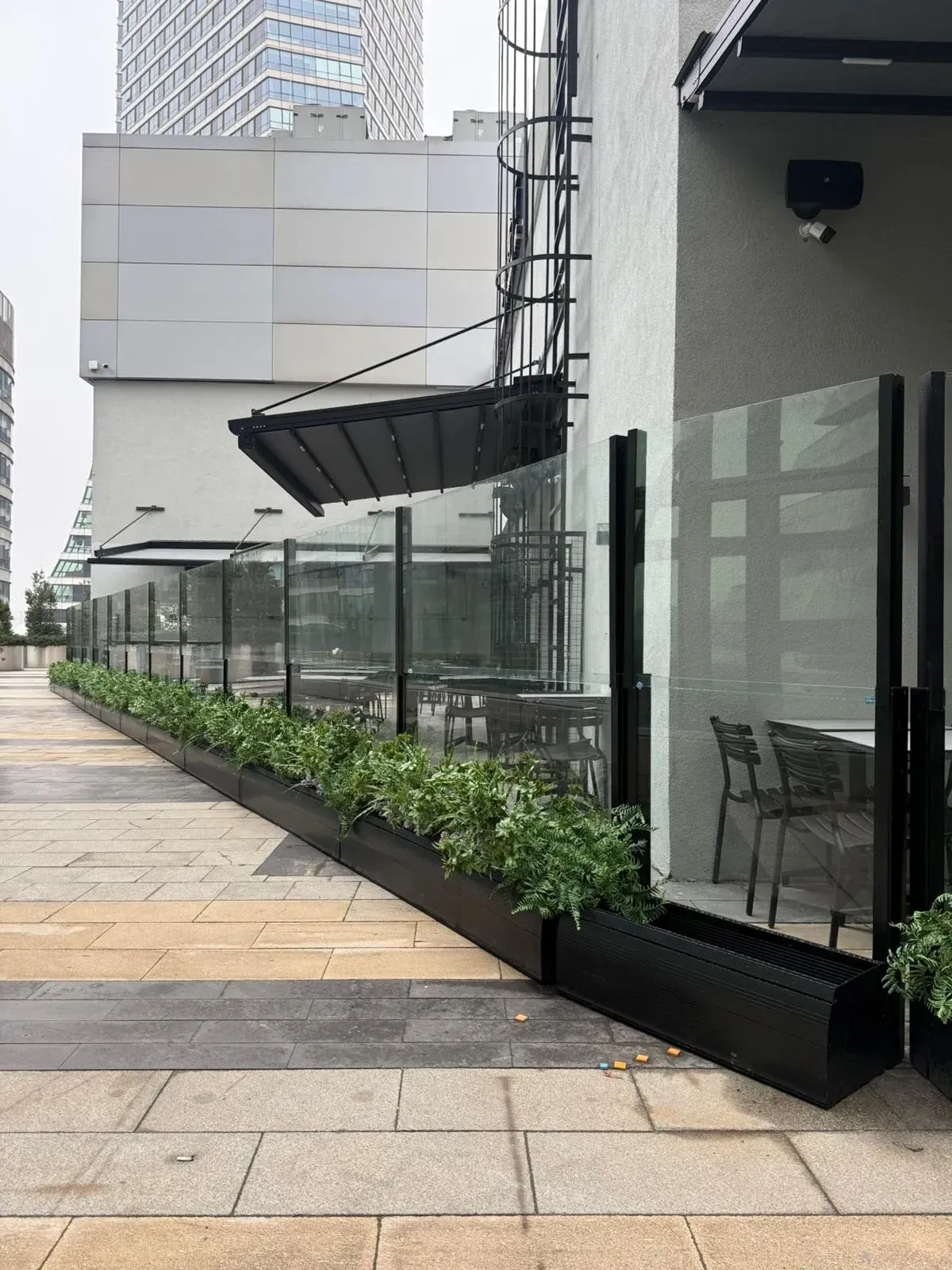
For coastal resorts, rooftop terraces, and locations exposed to extreme coastal wind loads, permanently anchored floor-fixed systems offer unmatched safety. Secured into reinforced concrete using 316-grade stainless steel chemical anchors, these barriers utilize 10 mm to 12 mm DIN EN 12150 tempered or laminated safety glass. They withstand severe gale-force winds exceeding 120 km/h with zero deflection or rattling.
3. Integrated LED Channel Windbreak Systems
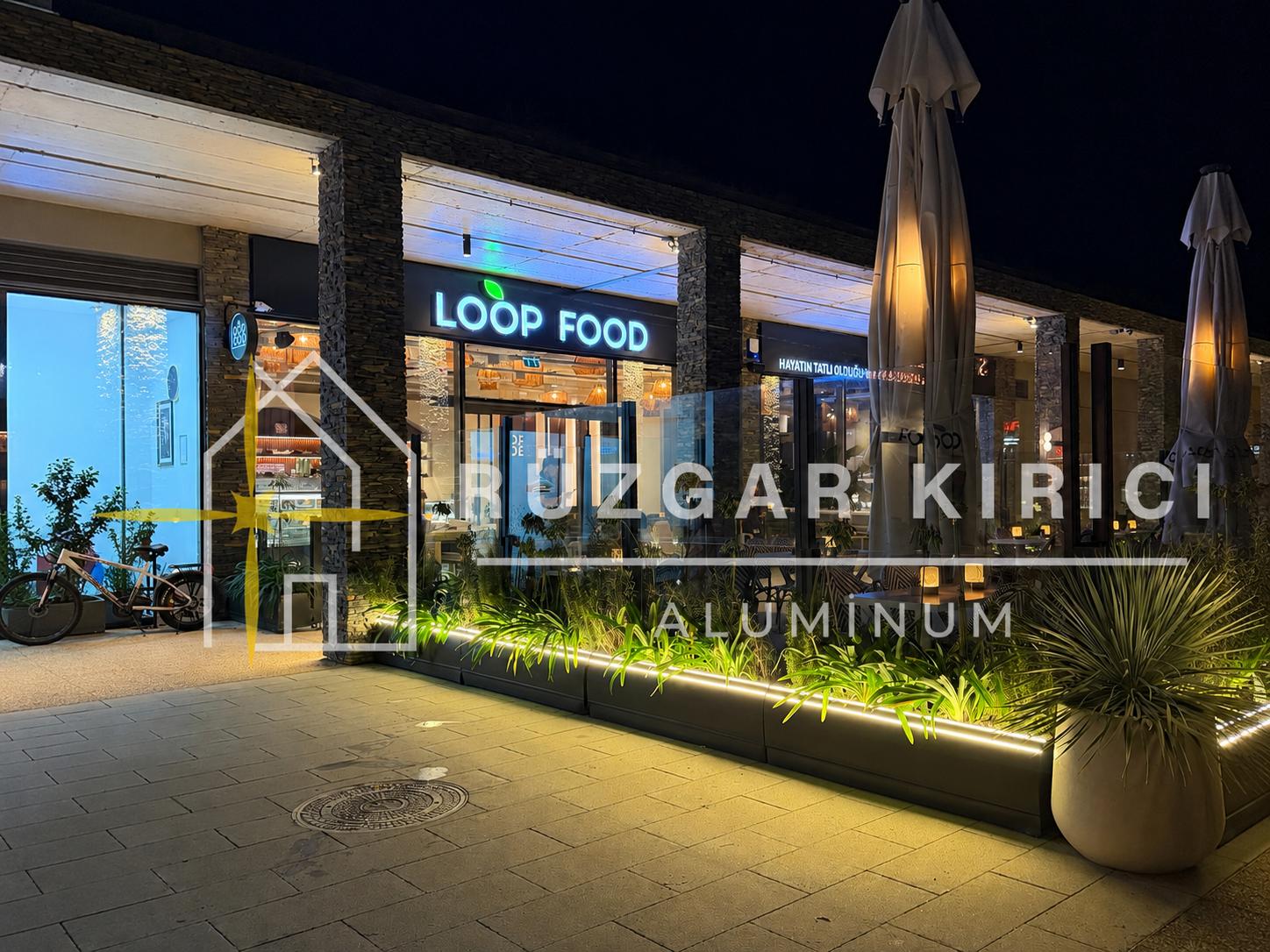
Because high-margin dining occurs after sunset, LED channel windbreak systems offer high visual impact. Concealed, waterproof IP67 low-voltage LED strips embedded within the lower aluminium profile wash the tempered glass with warm 3000K illumination. This creates an inviting lounge atmosphere, establishes clear perimeter security, and attracts passing street traffic.
Maximizing Patio Heating Efficiency with Glass Wind Walls
Installing gas or electric infrared patio heaters inside an unsheltered patio is inherently wasteful. Glass wind barrier panels stop horizontal wind drafts, allowing radiant heaters to warm surfaces, furniture, and guests effectively. Commercial field tests demonstrate that surrounding a patio with glass wind barriers raises ambient temperature by 5°C to 9°C, allowing venues to reduce patio heater fuel consumption by up to 45% while keeping patrons comfortable well into late autumn.
Why Partnering with a Direct Glass Windbreak Manufacturer Matters
Sourcing your commercial patio enclosure directly from an integrated custom glass windbreak manufacturer in Europe offers critical operational advantages over middleman retail distributors:
- Custom Engineering: Fully tailored height, length, RAL electrostatic powder-coating colors, and glass tinting options designed to match your corporate architectural identity.
- Certified Safety Standards: Every system complies with European CE directives and DIN EN 12150 impact standards for commercial public spaces.
- Factory-Direct Pricing: Significant savings by avoiding middleman margins and distributor markups.
- Worldwide Export Logistics: Shipped in ISPM-15 certified heavy-duty wooden crates with full transit insurance across Europe, the UK, and international destinations.
Get Your Custom Commercial Proposal Today
Whether you manage a bustling city cafe, a luxury beachfront resort, or a hotel veranda, commercial glass windbreak systems protect your guests and unlock full year-round seating capacity. Contact our engineering team today to review your terrace layout, request 3D design layouts, and receive an obligation-free manufacturer quote via our contact page or reach out instantly via WhatsApp.